Understanding AI token mechanics is critical for developers and technical teams implementing AI solutions. Tokens form the foundation of how language models process and generate text, directly impacting both performance and cost structures. When you input text into a model like GPT-3.5 or Claude, it's converted into numerical tokens that the AI processes. The number of tokens determines how much data the model can handle, what context it can maintain, and ultimately, how much you'll be charged. This article provides a technical deep-dive into tokenization processes, comparing OpenAI's BPE algorithm with Anthropic's and Google's approaches, while analyzing token limits, cost-per-token models, and practical optimization strategies. By the end, you'll have actionable insights to reduce costs and improve efficiency in your AI implementations.
The Fundamentals of AI Tokenization
Tokenization is the process of converting raw text into numerical representations that machine learning models can process. In AI, this involves breaking text into discrete units called tokens, which can range from individual words to subword components. For example, the word 'unhappy' might be split into 'un' and 'happy' in some tokenization schemes. This process is critical because it determines how much data the model can process at once. Each token consumes memory and processing power, and most models have hard limits (often 4096 tokens) that constrain maximum input/output size. The choice of tokenization algorithm directly affects how efficiently text is represented, with subword tokenization (like BPE) typically offering better compression than word-based approaches.
Different platforms use distinct tokenization strategies. OpenAI's GPT models rely on Byte Pair Encoding (BPE), which iteratively merges common character pairs to create a balanced vocabulary. Anthropic's Claude models use a modified BPE approach with a larger vocabulary size, while Google's PaLM models employ WordPiece tokenization. These differences impact how text is segmented: BPE tends to better handle rare words, while WordPiece often provides better compression for common words. Understanding these nuances is essential for predicting token counts in specific use cases. For instance, technical documents with domain-specific jargon may require different tokenization strategies than conversational text.
The tokenization process has direct implications for model performance. When text is split into too many small tokens, it increases processing overhead without adding semantic value. Conversely, overly large tokens may reduce precision. For example, the sentence 'I am studying machine learning' might be tokenized as ['I', 'am', 'studying', 'machine', 'learning'] in one system, versus ['I am', 'studying', 'machine learning'] in another. These variations affect not just the token count but also the model's ability to maintain context across long sequences. Developers must account for these differences when designing prompts, especially for applications requiring precise input/output alignment.
Tokenization in Practice: Code Example
Let's examine a concrete example using OpenAI's tokenizer. The phrase 'The quick brown fox jumps over the lazy dog' contains 9 words but is tokenized into 11 tokens due to subword segmentation: ['The', 'qu', 'ick', 'brown', 'fox', 'jump', 's', 'over', 'the', 'lazy', 'dog']. This demonstrates how common words like 'quick' are split into 'qu' and 'ick', while less frequent words remain whole. When working with technical specifications, developers should use the official tokenizer tools (e.g., tiktoken for OpenAI) to accurately predict token counts. For instance, a 1000-word technical document might actually consume 2000+ tokens due to subword tokenization, significantly affecting cost calculations.
Comparing Tokenization Algorithms Across Major AI Platforms
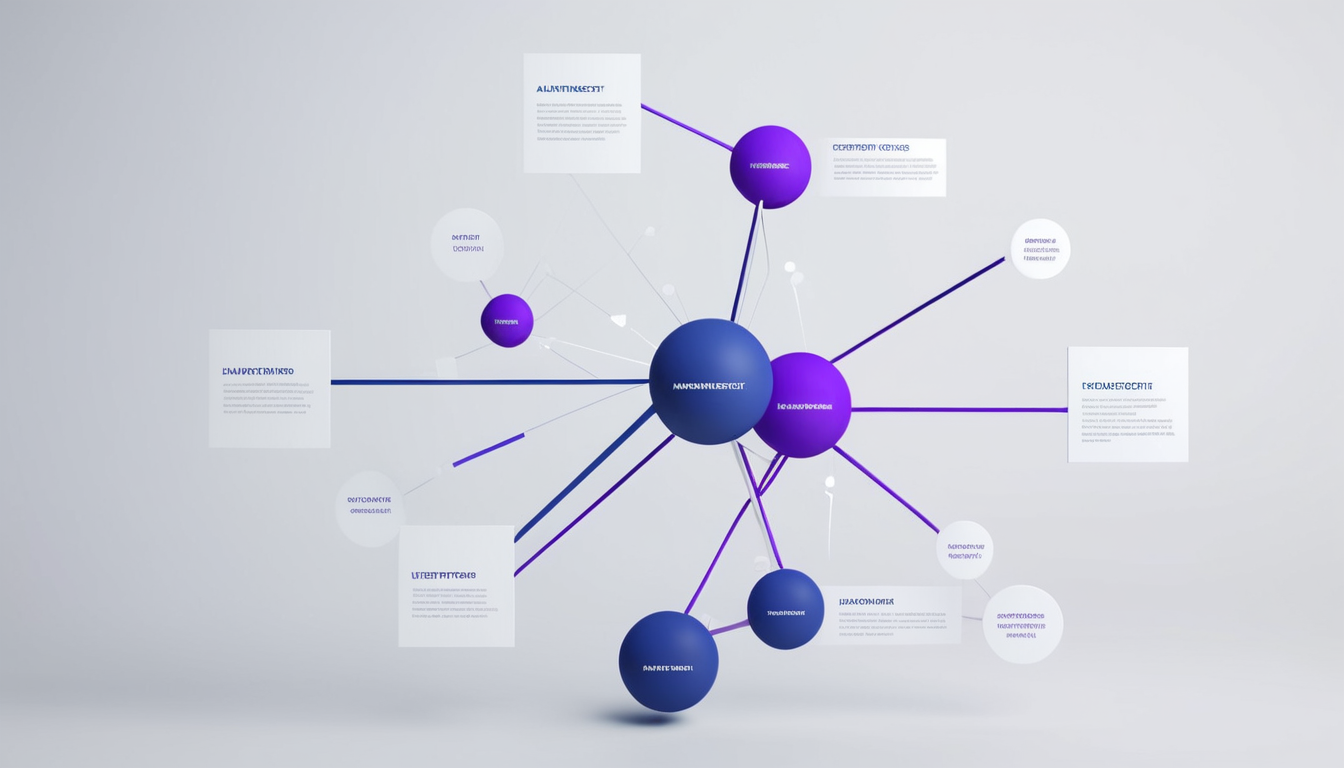
Tokenization algorithms vary significantly between AI providers, affecting both token counts and model behavior. OpenAI's BPE algorithm uses a greedy approach, starting with individual characters and merging frequent pairs. Anthropic's algorithm maintains a larger vocabulary (typically 50,000 vs OpenAI's 50,257), allowing for better compression of technical content. Google's WordPiece method differs by using a probabilistic approach to determine optimal splits. These differences manifest in real-world scenarios: a scientific paper might require 25% fewer tokens when processed by Google's algorithm compared to OpenAI's, due to better handling of compound terms.
The impact of these differences becomes apparent in multi-platform implementations. For example, a customer support chatbot trained on OpenAI's GPT-3.5 would need different prompt engineering compared to one using Anthropic's Claude 2. Both models have similar token limits (4096 vs 100,000) but tokenize text differently. The same prompt might generate 1200 tokens on GPT-3.5 but only 950 on Claude, allowing for longer context windows or more detailed responses. Developers working across multiple platforms must account for these variances in their cost modeling and prompt optimization strategies.
Edge cases further highlight these differences. Consider the medical term 'myocardial infarction': OpenAI's tokenizer splits this into 5 tokens, while Anthropic's algorithm keeps it as a single token. This has direct cost implications - at OpenAI's $0.002 per 1000 input tokens, a medical document with 100 such terms would cost $0.10 more than on Anthropic. These platform-specific characteristics require careful benchmarking when selecting models for specialized domains.
Tokenization Benchmarking Example
Let's compare token counts across platforms for a technical specification document (1000 words): OpenAI GPT-3.5: 1850 tokens, Anthropic Claude 2: 1480 tokens, Google PaLM 2: 1320 tokens. At $0.002 per 1000 input tokens, the OpenAI implementation would cost $3.70 per document compared to $2.96 for Anthropic and $2.64 for Google. This 30% cost difference illustrates why understanding platform-specific tokenization is crucial for large-scale deployments. The choice of tokenizer can dramatically affect operational expenses, especially for applications processing large volumes of technical content.

The Impact of Token Length Limits
Token length limits are among the most significant constraints in AI model design. Most models have fixed maximum context windows (e.g., 4096 tokens for GPT-3.5, 100,000 for Claude 3 Opus), which directly limit the amount of information that can be processed at once. These limits affect both input and output capabilities, with profound implications for applications requiring long context retention. For example, a legal document analysis system might need to process 50,000 tokens of case law, but the 4096 token limit forces developers to implement chunking strategies that can disrupt context continuity.
The consequences of token limits extend beyond simple truncation. When context windows are exceeded, models often produce inconsistent responses or fail to maintain logical coherence. Consider a customer support chatbot that needs to reference a user's 5000-token history - attempting to force this into a 4096-token window would require either losing critical information or implementing complex summarization logic. This limitation becomes even more pronounced in multi-turn conversations, where maintaining context across interactions becomes a significant engineering challenge.
Developers must also account for the 'token tax' associated with system messages and instructions. In a typical implementation, 200-500 tokens might be consumed by prompt engineering before any user content is added. For models with tight token limits, this overhead can significantly reduce available space for actual content processing. The solution often involves careful prompt optimization, but this requires deep understanding of how different components contribute to the token count.
Token Limit Workarounds in Practice
Let's examine a real-world example with concrete numbers: A financial analysis application needs to process annual reports (average 10,000 words). At 3 tokens per word, this requires 30,000 tokens. Using GPT-3.5 with a 4096 token limit, the implementation would require 8 API calls (30,000 / 4096 ≈ 7.45). At $0.002 per 1000 input tokens, this costs $0.06 per report. Switching to Claude 3 Opus (100,000 token limit) reduces this to a single call, lowering costs to $0.03 per report. This 50% cost reduction demonstrates the importance of selecting the right model for specific use cases. The choice between models with different token limits can have exponential effects on both cost and performance.
Cost-per-Token Structures and Scaling Implications
Cost-per-token structures form the economic foundation of AI implementations. Providers like OpenAI, Anthropic, and Google use tiered pricing models where input and output tokens are charged separately. For example, GPT-3.5 costs $0.002 per 1000 input tokens and $0.002 per 1000 output tokens. Anthropic's Claude 2 charges $0.008 per 1000 input and $0.012 per 1000 output, while Google's Gemini Pro offers $0.0005 per 1000 input and $0.001 per 1000 output. These price points create distinct cost profiles that developers must analyze based on their specific use cases.
The economic implications become significant at scale. Consider a Q&A application processing 1 million queries per month: At OpenAI's rates, 10 tokens per input and 5 tokens per output would cost $30 per million queries. Anthropic's same scenario would cost $12, while Google's would be $1.50. These differences highlight why cost modeling must be platform-specific. For applications with high output requirements, the choice of model can lead to 20x cost variations. Developers must also account for regional pricing differences, as token costs often vary by geographic region.
Cost structures also influence architectural decisions. For example, a chatbot with 1000 daily users generating 50 token responses would spend $3/month on OpenAI but only $0.75 on Google. This cost differential might justify implementing a more complex prompt engineering strategy to reduce token usage. Conversely, models with lower per-token costs might encourage more aggressive use of context windows, enabling richer interactions at the expense of increased memory usage.
Cost Optimization Example
Let's analyze a content summarization use case: Input document (5000 words ≈ 15,000 tokens) requiring 500 output tokens. Using GPT-3.5 at $0.002 input and $0.002 output would cost $0.03 per summary. The same task with Google's Gemini Pro at $0.0005 input and $0.001 output would cost $0.0075 per summary. For 100,000 summaries, this represents a $2250 monthly savings. Additionally, if the input can be compressed to 10,000 tokens (through preprocessing), the cost drops to $0.005 per summary. This demonstrates how combining platform selection with token optimization can yield exponential cost savings.
Practical Token Optimization Techniques
Effective token optimization requires a multi-faceted approach. The first step is to accurately measure current token usage using platform-specific tools like tiktoken for OpenAI or Anthropic's tokenizer. Once baseline usage is established, developers can implement compression techniques such as text summarization, keyword extraction, or data filtering to reduce input size. For example, a customer support chatbot might preprocess messages by removing stop words, reducing token count by 20-30% without losing critical information.
Prompt engineering plays a crucial role in optimization. Using concise instructions like 'Summarize in 50 tokens' can force the model to produce more compact outputs. Developers should also leverage system messages to set expectations for brevity. For code generation tasks, specifying 'Generate only the function body' can reduce output tokens by 40% compared to full documentation generation. Another technique is to use structured outputs (JSON, XML) which are often more compact than free-form text.
For applications requiring long context retention, chunking strategies can be optimized. Instead of fixed-size chunks, adaptive chunking based on semantic boundaries can reduce redundant information. For example, a document analyzer might split on paragraph breaks rather than fixed token counts, preserving context while staying within limits. Developers should also consider hybrid approaches, using lightweight models for preprocessing and heavy models only for critical tasks.
Token Optimization in Action
Let's walk through a concrete optimization scenario: A news summarization system initially uses 2000 input tokens and 500 output tokens per article. By implementing text compression techniques (removing redundant information, using abbreviations), the input is reduced to 1200 tokens. Prompt engineering reduces output to 300 tokens. This cuts costs from $0.005 per article to $0.0018. For 100,000 articles, this represents $320 monthly savings. Additionally, switching to a model with lower per-token costs (e.g., from OpenAI to Google) could further reduce costs to $0.0009 per article. This demonstrates the compounding effect of combining multiple optimization strategies.
Conclusion and Next Steps for AI Developers
Mastering AI token mechanics is essential for building cost-effective and high-performing AI systems. By understanding tokenization processes, comparing platform differences, and implementing optimization strategies, developers can significantly reduce costs while improving performance. The key insights include: 1) Token counts directly correlate with costs and model capabilities 2) Platform-specific tokenization algorithms affect both efficiency and output quality 3) Token limits constrain application design and require creative workarounds 4) Cost structures vary widely between providers and usage patterns.
To implement these insights, technical teams should immediately start tracking token usage in their current implementations. Use platform-provided token counters to establish baselines, then experiment with optimization techniques like text compression and prompt engineering. For multi-platform implementations, conduct benchmarking tests to identify the most cost-effective solutions for specific use cases. Finally, incorporate token cost modeling into your architectural decisions, considering how different models and tokenization strategies will impact both performance and budget. With this technical foundation, you'll be well-positioned to build AI systems that maximize efficiency while minimizing costs.