
When integrating AI APIs into applications, developers and business users often encounter a critical but poorly understood concept: tokenization. This article demystifies AI token basics, explaining how platforms like OpenAI, Anthropic, and Google measure and charge for API usage. Whether you're optimizing costs for a chatbot or analyzing large datasets, understanding token mechanics is essential. We'll break down how tokens work, compare pricing structures across providers, and provide actionable strategies to reduce token consumption without compromising performance. By the end, you'll have a clear roadmap for managing AI API expenses effectively.
What Are AI Tokens and Why Do They Matter?
AI tokens represent units of measurement for text processed by language models. Each word, punctuation mark, or whitespace character is converted into a token during API requests. For example, the sentence 'AI token basics are essential for API cost management.' contains approximately 12 tokens. Tokenization enables consistent billing and performance optimization across platforms. When you send a request to an AI API, the system tokenizes both input (your query) and output (the model's response). This dual-token system ensures predictable costs but requires careful management to avoid unexpected expenses. Understanding this foundational concept is crucial before exploring pricing models or optimization techniques.
The importance of tokens extends beyond billing. Token limits define the maximum context a model can process in a single request. OpenAI's GPT-3.5, for instance, supports 16,385 tokens per call (input + output). Exceeding this limit results in errors or truncated responses. Developers must account for this when designing applications. A chatbot with 10 previous messages (each averaging 150 tokens) leaves only 1,385 tokens for the new query and response. This constraint directly impacts user experience and system design decisions. By mastering token basics, you gain control over both cost and functionality.
Consider a real-world example: A customer support chatbot using OpenAI's API at $0.002 per 1,000 input tokens and $0.004 per 1,000 output tokens. If each conversation averages 250 input tokens and 150 output tokens, 10,000 monthly interactions would cost $5 + $6 = $11. Without token awareness, this could escalate to $44 for 40,000 interactions. This illustrates why token management is a strategic priority for any AI-powered application.
How Tokenization Works in Practice
Tokenization follows a three-step process: 1) Text is split into subwords using algorithms like Byte Pair Encoding (BPE), 2) Rare combinations are broken into smaller units, 3) Uncommon characters remain single tokens. For example, 'AI' might be a single token, while 'tokenization' could split into 'token'+'ization'. This method balances efficiency and accuracy. A 500-word document might generate 600-700 tokens due to punctuation and special formatting. Understanding these nuances helps predict costs and optimize prompts. By analyzing token patterns in your use case, you can design more cost-effective API interactions.
Tokenization in Major AI Platforms: OpenAI, Anthropic, and Google
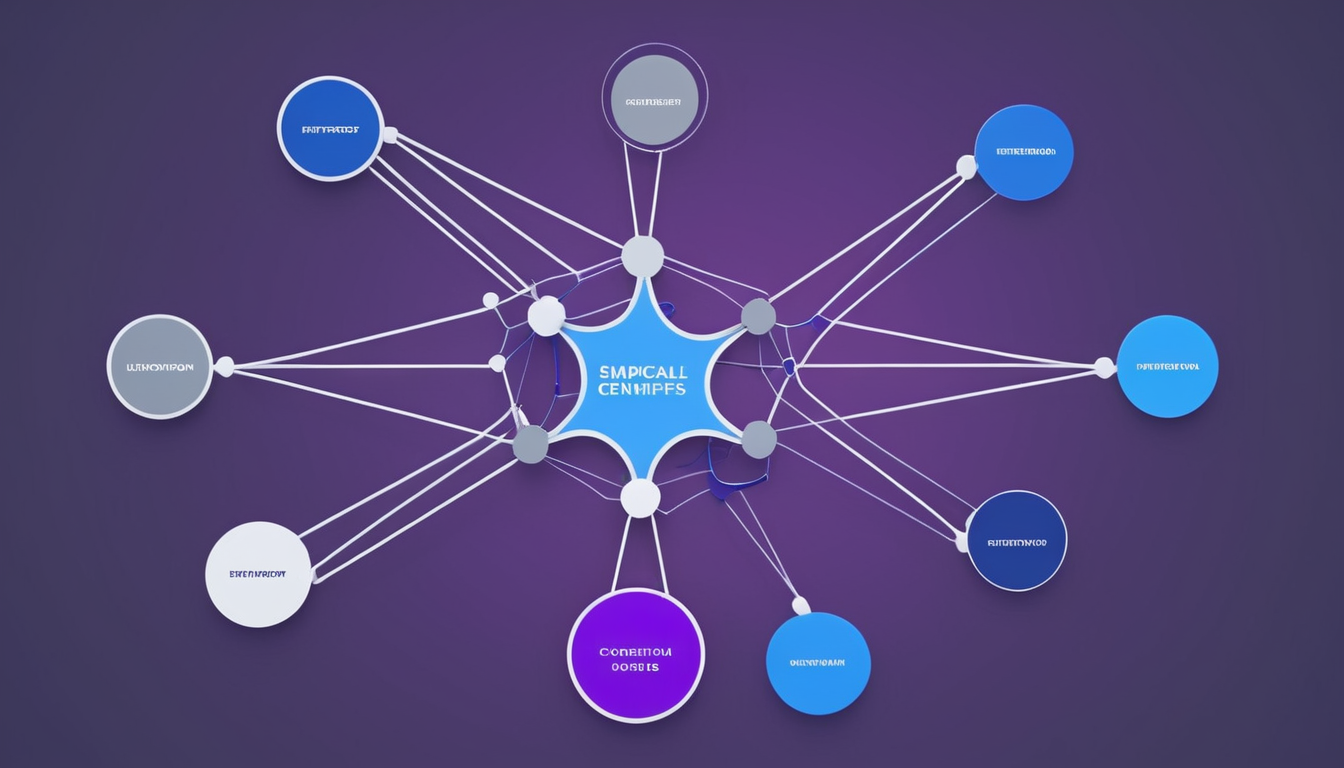
Each major AI provider has unique tokenization approaches. OpenAI uses the GPT-3 BPE tokenizer, which splits text into ~4,000 unique units. Anthropic's Claude models employ a different algorithm, producing slightly different token counts for the same text. Google's Vertex AI uses its own tokenizer, optimized for multilingual support. These variations mean the same text might yield different token counts across platforms. For example, the phrase 'AI token pricing models' might be 5 tokens on OpenAI but 4 on Anthropic. This highlights the need to test tokenization for your specific use case on each platform before making deployment decisions.
Platform-specific quirks matter. Anthropic's Claude-2 can handle 100,000 tokens per request, making it ideal for long-form content generation. Google's PaLM 2 uses a 8,192 token limit but offers more consistent tokenization across languages. OpenAI's GPT-4 supports 32,768 tokens but charges premium rates for extended contexts. Developers must balance these factors against their use case requirements. A legal document analysis tool might prioritize Claude's higher token limit, while a multilingual chatbot could favor Google's language optimization.
Testing is critical. OpenAI provides a free token counter tool, while Anthropic offers a Python library for local tokenization. Google's Vertex AI includes a token estimation API. By measuring your specific content on each platform, you can make informed decisions about cost, performance, and feature compatibility. This proactive approach prevents unexpected billing surprises and ensures optimal resource allocation.
Platform Comparison for Tokenization
A direct comparison reveals significant differences. The sentence 'AI token basics are essential for API cost management.' generates 12 tokens on OpenAI, 11 on Anthropic, and 13 on Google. For a 1,000-word document, this could translate to 1,200 vs 1,100 vs 1,300 tokens. These variations compound with extended content. A 10,000-word legal contract might require 12,000 tokens on OpenAI (costing $12 at $0.001/100 tokens) but 11,000 tokens on Anthropic ($11 at $0.001/100 tokens). While the difference seems small, it adds up across multiple documents or users. This underscores the importance of platform-specific testing before scaling AI integrations.

AI Token Pricing Models: How Providers Charge for Usage
Pricing models vary significantly between providers and models. OpenAI charges separately for input and output tokens, with rates like $0.0015 per 1,000 input tokens and $0.002 per 1,000 output tokens for GPT-3.5. Anthropic uses a unified rate of $0.003 per 1,000 tokens for Claude 2, regardless of input/output. Google's Vertex AI charges $0.0005 per 1,000 input tokens and $0.00125 per 1,000 output tokens for Text Bison. These differences create tradeoffs. Anthropic's model offers simplicity but lacks granularity, while OpenAI's approach allows precise cost control but requires careful monitoring of both input and output.
Model tiering adds complexity. OpenAI's GPT-4 is significantly more expensive than GPT-3.5 ($0.03 per 1,000 input tokens vs $0.0015). Anthropic's Claude 3 is priced at $0.0002 per 1,000 tokens for the base model but jumps to $0.001 for the enhanced version. Google offers a 'foundation model' tier at lower rates but charges premium for advanced features like code generation. Businesses must evaluate these tiers against their performance requirements. A simple Q&A bot might function well on a lower-tier model, while a complex data analysis tool may require the advanced tier despite higher costs.
Volume discounts and credits programs further complicate pricing. OpenAI offers tiered pricing for high-volume users, reducing input token costs by 20% at 1 million monthly tokens. Anthropic provides enterprise pricing for large organizations. Google's AI Platform credits can be combined with on-demand billing. These incentives make it essential to estimate your monthly token usage before committing to a provider. A company using 1 million tokens monthly might save 15-25% by choosing the right pricing plan.
Cost Comparison: Input vs Output Tokens
Output tokens are consistently more expensive than input tokens across all providers. OpenAI charges $0.002/output vs $0.0015/input for GPT-3.5, a 33% premium. Anthropic's Claude 2 charges $0.003 for both input and output (equal pricing), while Google charges $0.00125/output vs $0.0005/input (150% markup). This pricing pattern reflects the computational intensity of generating text versus analyzing it. Developers should prioritize minimizing output tokens where possible. For example, a chatbot could be configured to generate concise responses (150 tokens) instead of lengthy explanations (500 tokens), cutting costs by 70% while maintaining usability.
Strategies for Reducing AI Token Consumption
Effective token management requires a multi-pronged approach. First, optimize prompts to be concise yet informative. Instead of asking 'Can you explain the history of artificial intelligence in detail?', try 'Summarize AI history in 100 words.' This reduces input tokens by 50% while maintaining the core request. Second, implement response length controls. Most platforms allow specifying maximum tokens in the API request. Limiting responses to 200 tokens instead of 500 can cut output costs by 60%. Third, use caching for common queries. If multiple users ask the same question, store the response and reuse it instead of generating new tokens each time.
Content preprocessing can further reduce token usage. For document analysis, extract only relevant sections instead of processing entire files. A 10,000-word contract might be reduced to 1,000 tokens by isolating clauses. For chatbots, truncate conversation history by keeping only the last 3-5 messages. This maintains context while staying within token limits. Additionally, use text compression techniques like removing stop words ('the', 'and') or replacing common phrases with abbreviations. These techniques can reduce token counts by 20-30% without losing critical information.
Monitoring and analytics are essential for ongoing optimization. Most providers offer usage dashboards showing token consumption patterns. Regularly analyzing these metrics helps identify cost drivers. For example, you might discover that 40% of tokens are consumed by a single feature. This insight enables targeted optimizations. Implementing these strategies can reduce token costs by 30-50%, making AI integrations more sustainable. A company spending $5,000/month on tokens could save $1,500-$2,500 with effective management.
Real-World Optimization Example
Consider a news summarization service using OpenAI's API. Initially, the system processes full articles (1,500 tokens each) and generates 300-token summaries, costing $0.00225 + $0.0006 = $0.00285 per article. By extracting only key paragraphs (500 tokens) and limiting summaries to 150 tokens, the cost drops to $0.00075 + $0.0003 = $0.00105 per article. For 10,000 monthly articles, this saves $18,000. Additional optimizations like caching 20% of common queries could save another $3,600. This illustrates how strategic token management transforms AI economics from cost centers to scalable solutions.
Choosing the Right AI API for Your Token Needs
Selecting an AI provider requires balancing cost, performance, and token characteristics. For high-volume, low-complexity tasks, Google's Vertex AI offers competitive input token pricing. Anthropic's Claude models excel at long-form content with generous token limits. OpenAI's GPT-4 provides superior accuracy for complex tasks but at higher costs. Consider three key factors: 1) Token pricing per input/output, 2) Maximum tokens per request, 3) Language and domain specialization. A multilingual customer support system might choose Google, while a code generation tool might favor OpenAI despite higher costs.
Test each option with your specific workload. Use free tier credits or trial periods to measure token consumption and costs. For example, a medical documentation system might find that OpenAI's API requires 20% more tokens than Anthropic's for the same task, but produces more accurate results. This tradeoff between token efficiency and output quality is common. Document your findings in a comparison matrix, evaluating factors like: cost per 1,000 tokens, maximum context size, language support, and API latency. This data-driven approach ensures optimal platform selection.
Don't overlook non-monetary factors. Some platforms offer better developer tools, documentation, and support. OpenAI's API explorer and token counter are industry benchmarks. Anthropic provides detailed usage analytics. Google's Vertex AI integrates seamlessly with other GCP services. These tools can reduce implementation time and maintenance costs. For enterprise users, consider platform stability and SLAs. A production system might require 99.9% uptime guarantees available only on certain platforms. By systematically evaluating all factors, you'll make an informed decision that aligns with both technical and business goals.
Conclusion: Your Next Steps in Mastering AI Tokens
Understanding AI token basics is the foundation for effective API usage. You now know how tokenization works, how providers charge for usage, and practical strategies to reduce costs. The next step is to apply these concepts to your specific use case. Start by calculating your monthly token requirements using the formulas: (average input tokens * input cost) + (average output tokens * output cost) = monthly cost. Test different scenarios to identify cost drivers. For example, if output tokens account for 70% of your expenses, focus on optimizing response lengths and conciseness.
Implement a token monitoring system to track usage in real time. Most providers offer usage dashboards and webhooks for cost alerts. Set up alerts for when token consumption exceeds 80% of your budget. Use this data to refine your optimization strategies. Consider implementing a tiered approach: use lower-cost models for simple tasks and high-end models for complex operations. For example, use Google's Text Bison for basic text classification and OpenAI's GPT-4 only for specialized queries. This hybrid strategy can reduce costs by 40-60% while maintaining performance. Finally, stay updated on pricing changes and new models. AI token economics evolve rapidly, and staying informed ensures you always use the most cost-effective solutions.